
This SIS fuelling guide shows you how many carbs, how much fluid and how much salt you need for your next ride or event, and which Science in Sport products get you there. Your needs change with three things: how long you ride, how hard you ride (your heart rate) and how much you sweat. So we break each one down, then turn it into simple plans for a 90-minute crit, a 100km fondo and a 200km day like Around the Bay.
SIS fuelling guide at a glance: carbs per hour
Start with how long you will be riding. Then move up or down the range depending on how hard the ride is.
| Ride length | Carbs per hour | Easy SIS way to get there |
|---|---|---|
| Under 75 minutes | 0–30g | Water or a GO Hydro bottle. A GO Isotonic Gel if it is a race. |
| 75 minutes – 2 hours | 30–60g | 1 bottle of GO Electrolyte + 1 GO Isotonic Gel |
| 2–3 hours | 60–90g | 1 sachet of Beta Fuel Drink per hour, or GO Electrolyte + 2 GO gels |
| 3 hours + | 80–120g | Beta Fuel Drink + a Beta Fuel Gel or Beta Fuel Chew each hour |
These ranges match current sports nutrition advice for endurance riding. However, the top end (over 90g an hour) only works if you have trained your gut to handle it. More on that below.
Factor 1: how long you ride
Your body stores enough carbohydrate in your muscles and liver for roughly an hour or so of hard riding. So for short rides, a good breakfast covers you. After that, the tank starts to run down, and you need to top it up as you go.
The longer the ride, the more the top-up matters. That is why a 100km bunch ride and a 200km event need very different plans, even at the same pace. Also, start eating early. If you wait until you feel hungry, you are already behind.
Factor 2: how hard you ride (heart rate)
The harder you ride, the faster you burn carbohydrate. At an easy chatting pace, your body burns a lot of fat. But as your heart rate climbs, it leans more and more on carbs. As a result, a hard ride needs more fuel per hour than an easy ride of the same length.
Use your heart rate (or the talk test) to pick where you sit in the range:
| Effort | Rough heart rate | Talk test | Where to sit in the range |
|---|---|---|---|
| Easy (Zone 1–2) | Under ~75% of max | Full sentences | Bottom of the range |
| Steady / tempo (Zone 3) | ~75–85% of max | Short sentences | Middle of the range |
| Hard / racing (Zone 4+) | Over ~85% of max | A few words only | Top of the range |
So a 3-hour easy coffee ride might need 60g an hour. Meanwhile, a 3-hour race or a fast bunch ride with lots of surges is closer to 90g or more. Heart rate zones vary from rider to rider, so treat these numbers as a guide, not a rule.
Factor 3: how much you sweat (fluid and salt)
Carbs keep your legs going. Fluid and salt keep your body cool and working properly. Both matter, and they change a lot from rider to rider.
Work out your sweat rate
You can test your sweat rate at home with a bathroom scale:
- Weigh yourself (in as little as possible) before a one-hour ride at your usual event pace.
- Ride, and note how much you drink.
- Towel off and weigh yourself again.
- Weight lost (kg) + fluid drunk (litres) = your sweat rate in litres per hour.
For example, if you lose 0.8kg and drink 0.5 litres, your sweat rate is about 1.3 litres an hour. Do the test on a mild day and a hot day, because heat can change your result a lot.
Most riders sweat somewhere between 0.5 and 1.5 litres an hour. However, you do not need to replace every drop. Aim to drink about 400–800ml an hour on most rides, and more on hot days if you are a heavy sweater. Also, do not drink far more than you sweat. Drinking too much plain water on a long day can dilute your blood salt, which is dangerous.
Are you a salty sweater?
Sweat contains sodium (salt), and the amount varies hugely. Some riders lose as little as 200mg per litre of sweat, while others lose 2,000mg or more. So two riders on the same ride can need very different amounts of salt.
Signs you are a salty sweater:
- White salt marks on your kit or helmet straps
- Sweat that stings your eyes
- A gritty feeling on your skin after a ride
- Cramping on long or hot days, even when you have fuelled well
| Your sweat | What to do | SIS products |
|---|---|---|
| Light sweater, mild day | Carbs are the priority. Salt from a normal energy drink is enough. | GO Energy or GO Electrolyte |
| Average sweater, warm day | Use an electrolyte drink in at least one bottle. | GO Electrolyte + GO Energy + Electrolyte Gels |
| Heavy or salty sweater, hot day | Add a high-salt bottle alongside your carbs. | GO Hydro or Hydro+ in one bottle, carbs in the other |
One handy point: the Beta Fuel Drink is almost all carbohydrate, with very little salt. So on a hot day, pair it with a GO Hydro or Hydro+ bottle. That two-bottle setup (one for fuel, one for salt) is simple and easy to adjust.
The SIS range explained: GO vs Beta Fuel
SIS splits its fuel into two families. Once you know the difference, choosing gets much easier.
- GO is the everyday range. GO gels give you 22g of carbs each, and they are isotonic, so you can take them without water. They suit rides up to about 2–3 hours, training days and riders new to fuelling.
- Beta Fuel is the long-day range. It uses a 1:0.8 mix of maltodextrin and fructose. Because the two sugars absorb through different routes in your gut, you can take in more carbs per hour with less stomach upset. Beta Fuel suits rides over 2–3 hours, racing and big events.
SIS backs Beta Fuel with its own research. In a 2022 study published in the Journal of Applied Physiology (funded by SIS), trained cyclists took in 120g of carbs an hour from Beta Fuel without stomach problems. The study also found the drink, gel and chew all worked equally well. So you can mix the formats to suit what you like.
Every SIS fuel product, side by side
| Product | Carbs | Sodium | Caffeine | Best for |
|---|---|---|---|---|
| GO Isotonic Gel | 22g | – | – | Everyday rides, first gel |
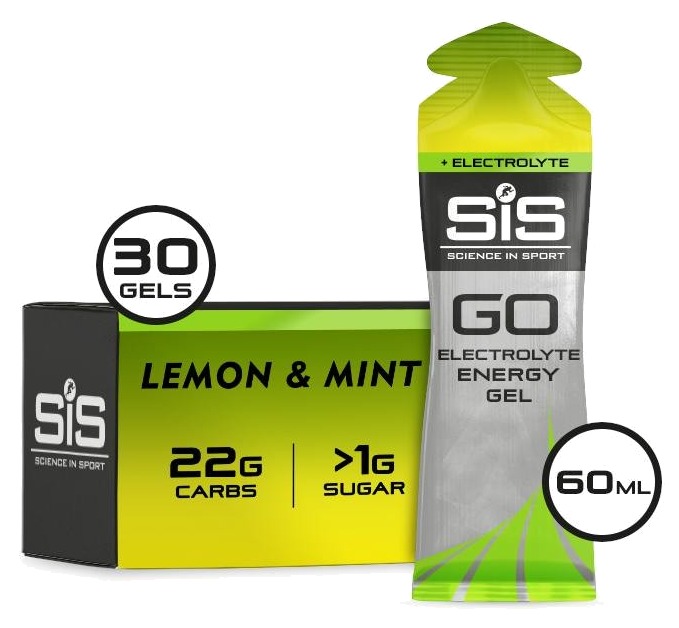
| GO Energy + Electrolyte Gel | 22g | 118mg | – | Hot days, heavy sweaters |
| GO Energy + Caffeine Gel | 22g | – | 75mg or 150mg | Race starts, last hour |
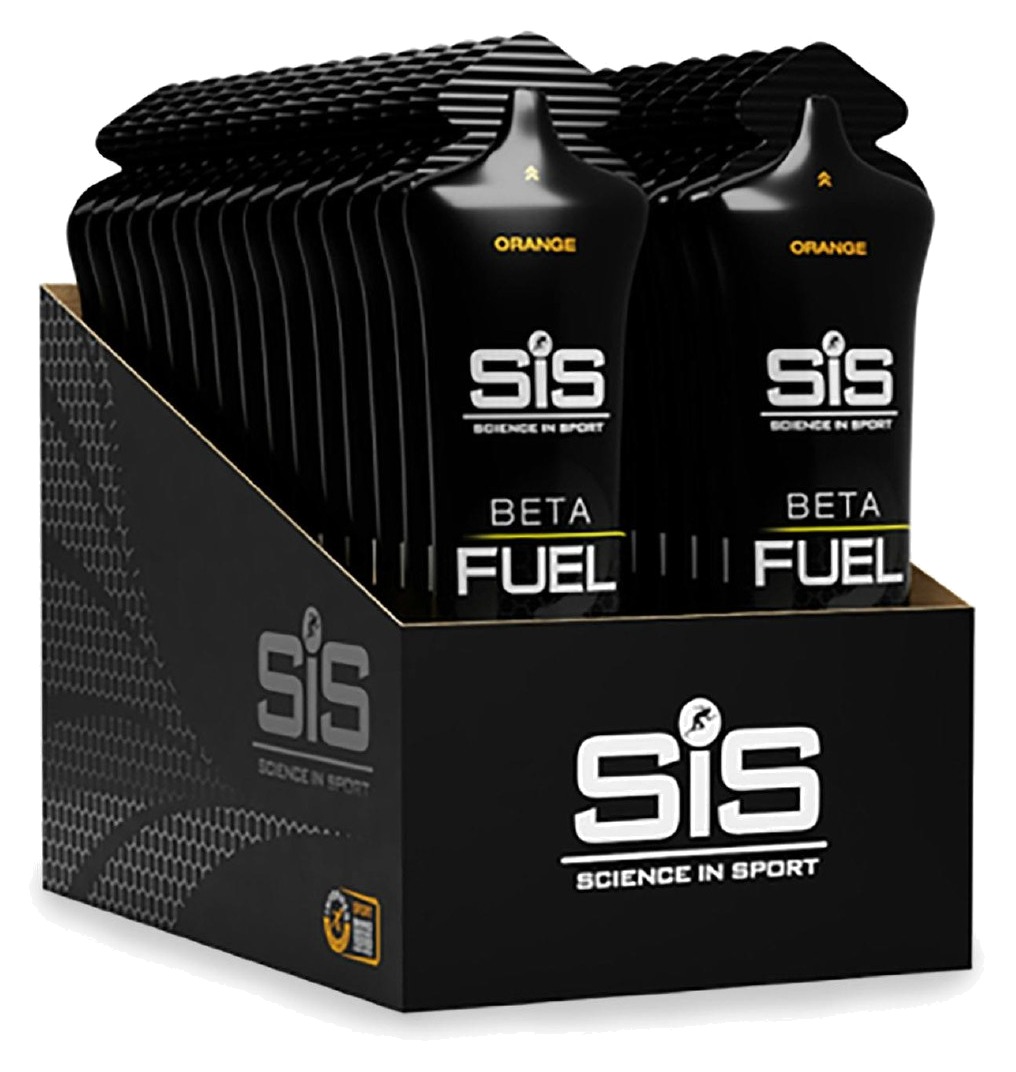
| Beta Fuel Gel | 40g | – | – | Long rides, racing |
| Beta Fuel + Nootropics Gel | 40g | – | 200mg | The final hour of a big day |
| Beta Fuel Chew | 46g | – | – | Solid food on long days |
| Beta Fuel Drink (600ml) | 80g | Very low | – | A full hour of carbs in one bottle |
| GO Energy Powder (500ml) | 47g | Low | – | Cheap everyday bottle fuel |
| GO Electrolyte (500ml) | 36g | ~230mg | – | Carbs and salt in one bottle |
| GO Energy Bake | 30g | Low | – | Real-food feel, early in a ride |
| GO Hydro Tablet (500ml) | Under 1g | ~350mg | 75mg in Cola only | Salt without calories, pre-loading |
| Hydro+ Sachet (500ml) | – | 350mg | – | Pocket-sized salt for refills |
Sodium figures for GO Hydro and Hydro+ come from SIS product labels. Always check the pack, as formulas can change.
Energy gels: GO or Beta Fuel?
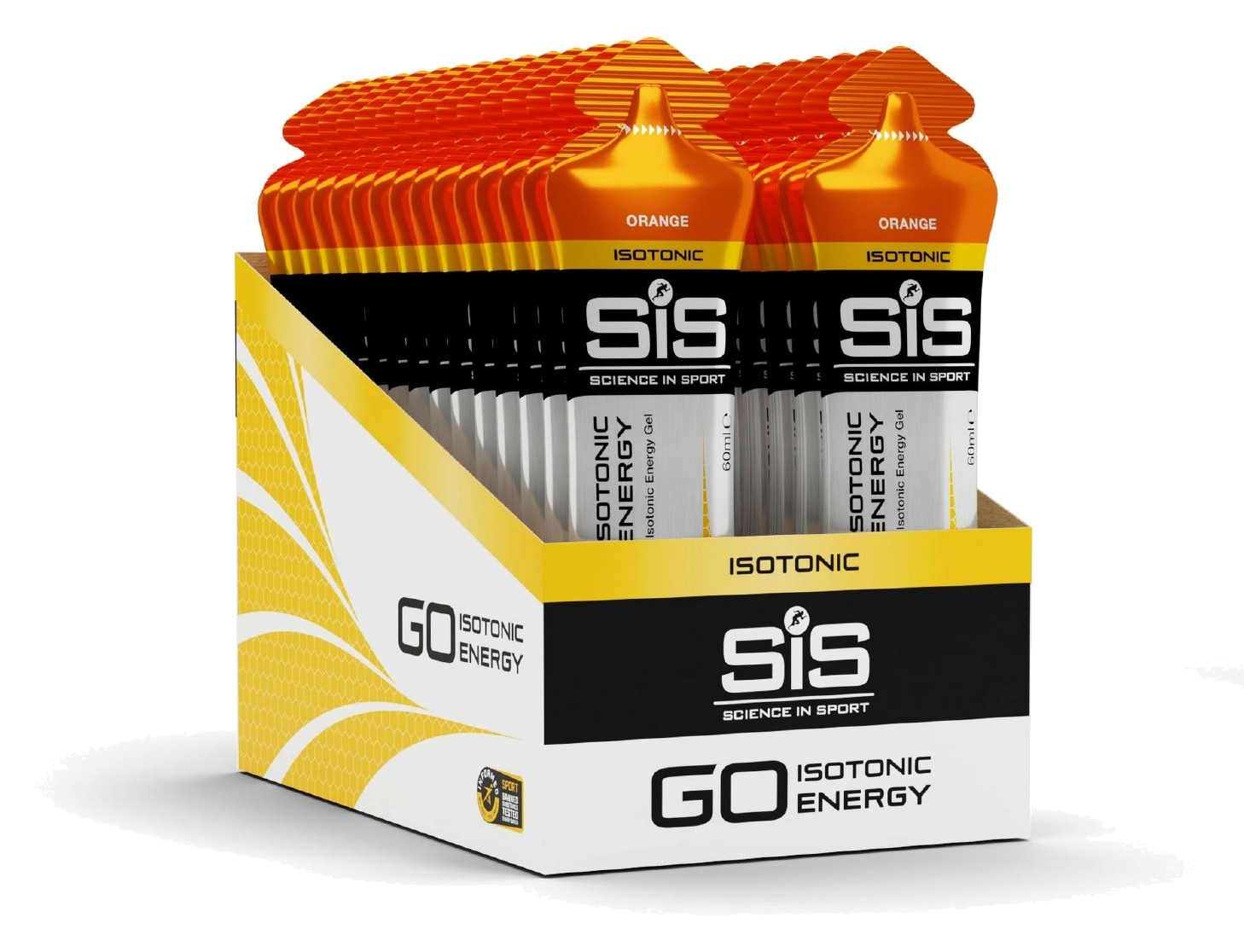
Pick the GO Isotonic Gel if you ride up to two or three hours and want something gentle and easy. Want to try the flavours first? The GO Isotonic Gel Variety Pack has seven. On hot days, swap some for the GO Energy + Electrolyte Gel. SIS suggests one electrolyte gel and two GO Isotonic gels an hour on rides over 90 minutes.
Step up to the Beta Fuel Gel for long days. At 40g a gel, two of them give you 80g, so you carry fewer packets. Plus, the Neutral flavour is handy late in a ride when sweet flavours get tiring.
Drinks: one bottle, a whole hour of fuel
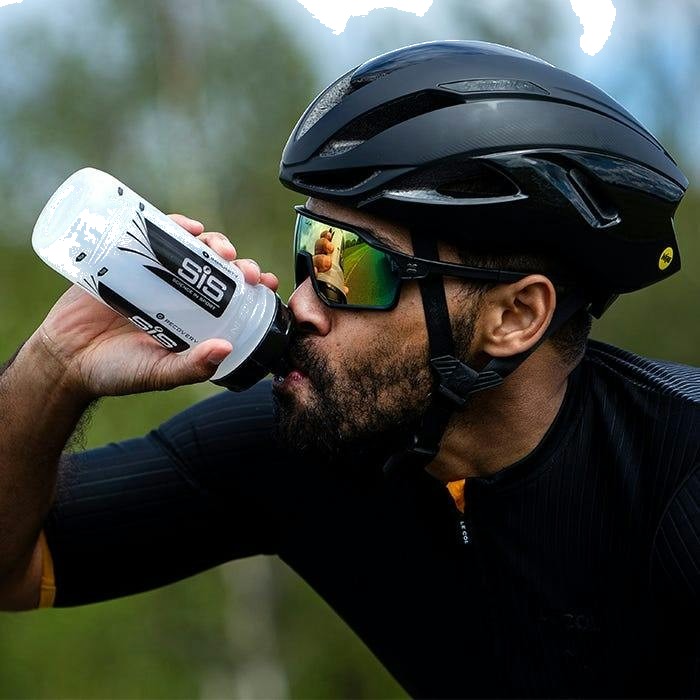
Drinking your carbs is the easiest way to fuel, because you are drinking anyway. The Beta Fuel Drink covers most of an hour in one bottle. Meanwhile, GO Electrolyte gives you less carbohydrate but more salt, so it suits warm rides. For lots of training at the lowest cost per bottle, the GO Energy Powder 1.6kg tub is hard to beat.
Chews and bars: when you want to chew something
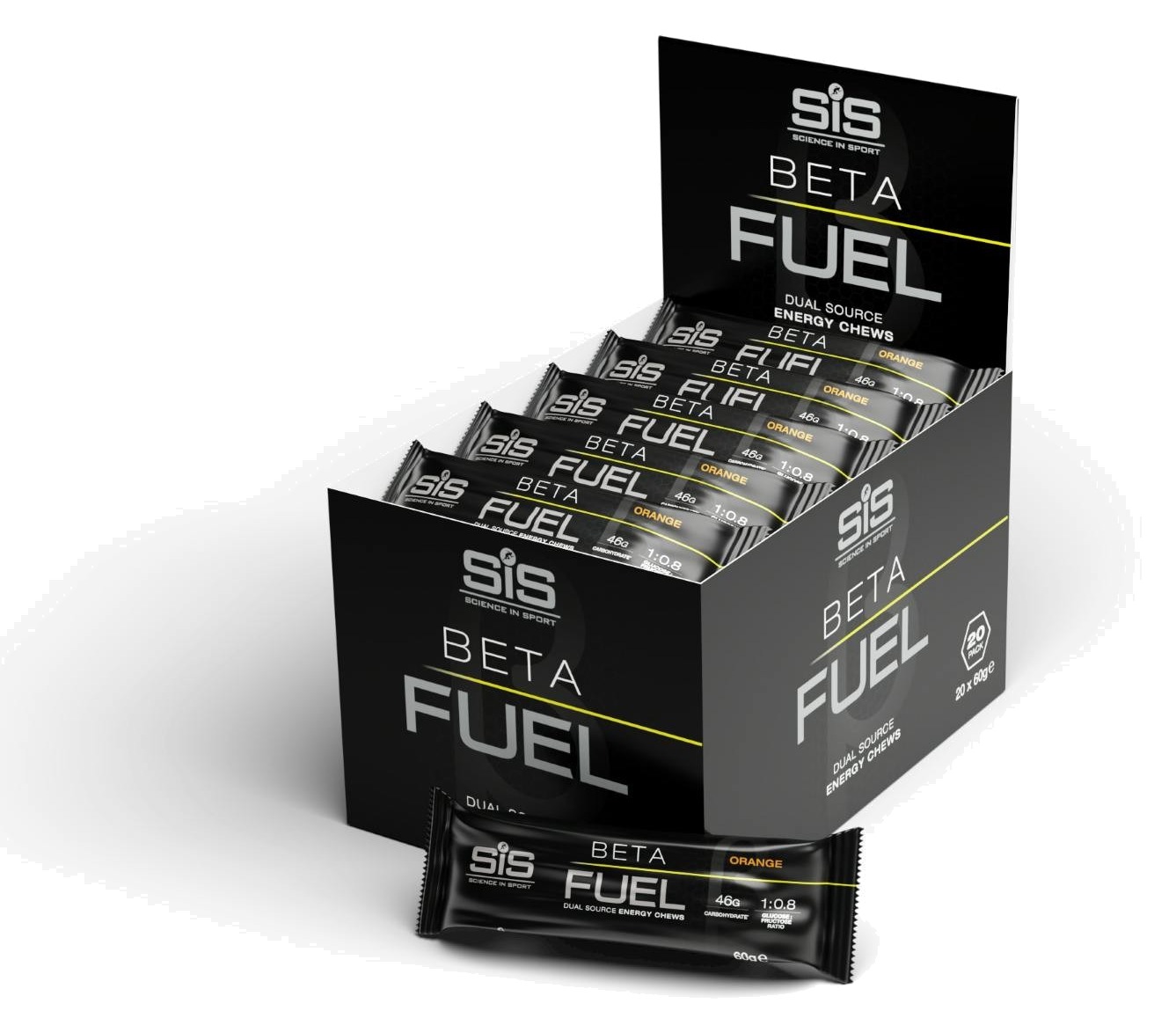
On long days, many riders like something solid in the early hours, then switch to gels and drinks as the pace goes up. The Beta Fuel Chew packs a big 46g hit. For a more cake-like option, try the GO Energy Bake in Lemon, Strawberry or Tiramisu.
Hydration: salt without the sugar
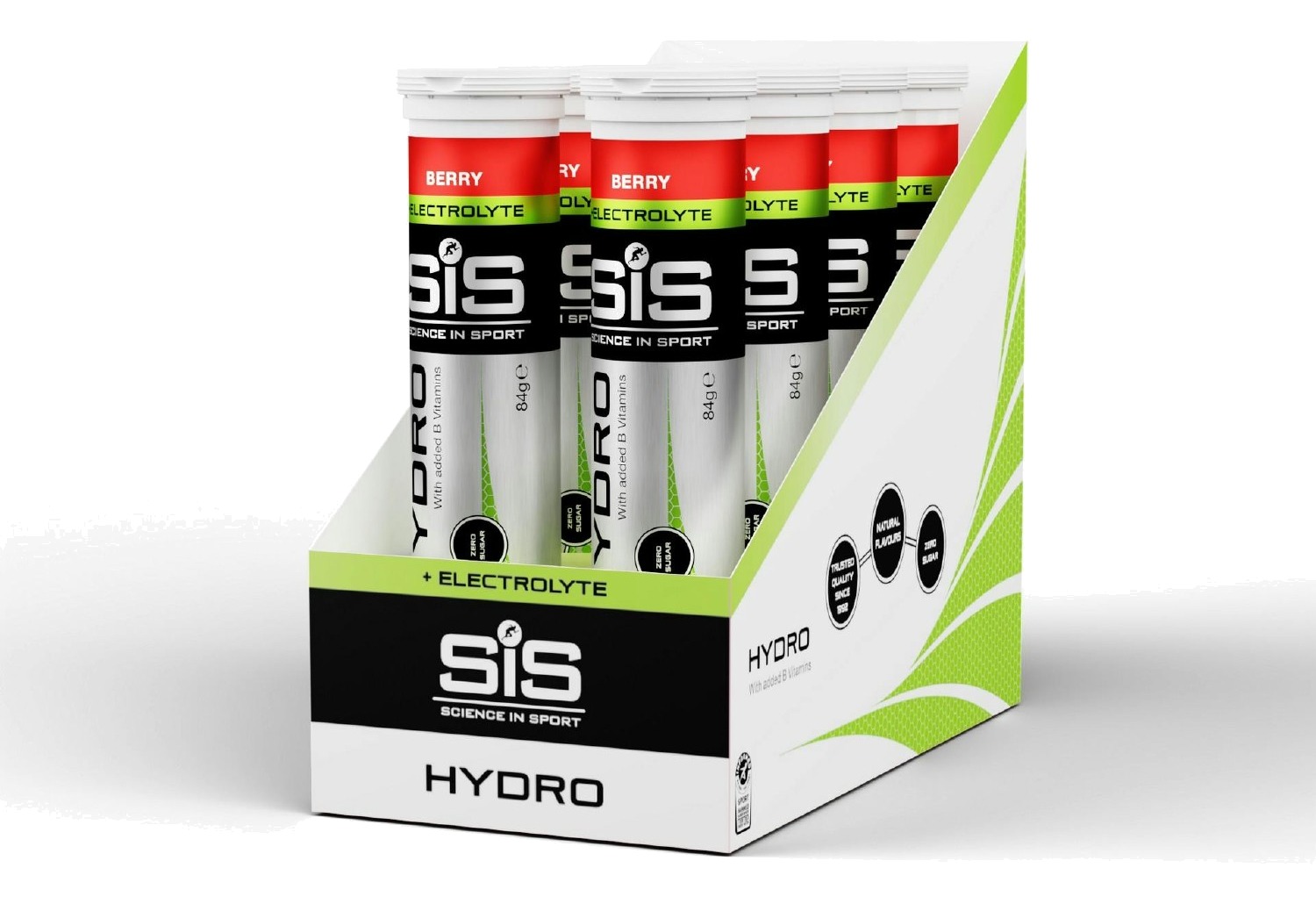
GO Hydro tablets and Hydro+ sachets add salt and almost no calories. So use them for short rides that do not need carbs, for pre-loading before an event, and as your second bottle on hot days. Hydro+ sachets are easy to carry for a refill at the café stop.
Caffeine and nitrate: the optional extras
Caffeine makes hard efforts feel easier and helps you stay sharp. You can get it from the GO Energy + Caffeine Gel, the Beta Fuel + Nootropics Gel (200mg) or the GO Caffeine Shot (150mg). Around 3mg per kilo of body weight is plenty for most riders, so a 75kg rider needs about 225mg across the ride. Also, test caffeine in training first, and avoid it if you are sensitive to it.
The Nitrate Shot helps your muscles use oxygen more efficiently at a steady effort. Take it 2–3 hours before the start. It suits time trials, gran fondos and long steady events.
Sample SIS fuelling plans
Here is how the numbers come together for three common rides. Adjust them up or down for your pace, the weather and what you have practised.
90-minute crit or hard bunch ride (high heart rate)
- Target: about 30–60g of carbs an hour
- 30 minutes before: a GO Energy + Caffeine Gel (22g)
- During: 1 bottle of GO Electrolyte (36g) + 1 GO Isotonic Gel (22g) at the halfway mark
- Total: about 80g across the session
3-hour fondo or 100km bunch ride (steady to hard)
- Target: about 60–90g of carbs an hour
- Each hour: 1 bottle of GO Electrolyte (36g) + 2 GO Isotonic Gels (44g) = 80g
- Or simpler: 1 sachet of Beta Fuel Drink per hour (80g), with water or GO Hydro in your second bottle
5–8 hour day: 200km Around the Bay, a gran fondo or a big gravel ride
- Target: about 80–120g of carbs an hour (only go above 90g if you have practised it)
- Early hours: 1 Beta Fuel Drink (80g) + half a Beta Fuel Chew (23g) = about 100g
- Later hours: 1 Beta Fuel Drink (80g) + 1 Beta Fuel Gel (40g) = 120g
- Final hour: swap one gel for a Beta Fuel + Nootropics Gel for a lift
- Salt: on a warm day, carry Hydro+ sachets and add one to every second refill
- Carry: pre-measured Beta Fuel sachets in your pockets, then mix at each drink stop
Before and after your event
The day before and the morning of
- For events over about 90 minutes, eat more carbohydrate than usual the day before (pasta, rice, bread, potatoes).
- Have a carb-based breakfast 2–3 hours before the start, and keep it familiar.
- SIS suggests drinking 500ml of GO Hydro 3–4 hours before a big event, then a little more in the hours before you start.
- If you use it, take a Nitrate Shot 2–3 hours out, and caffeine about 30 minutes before.
After the ride
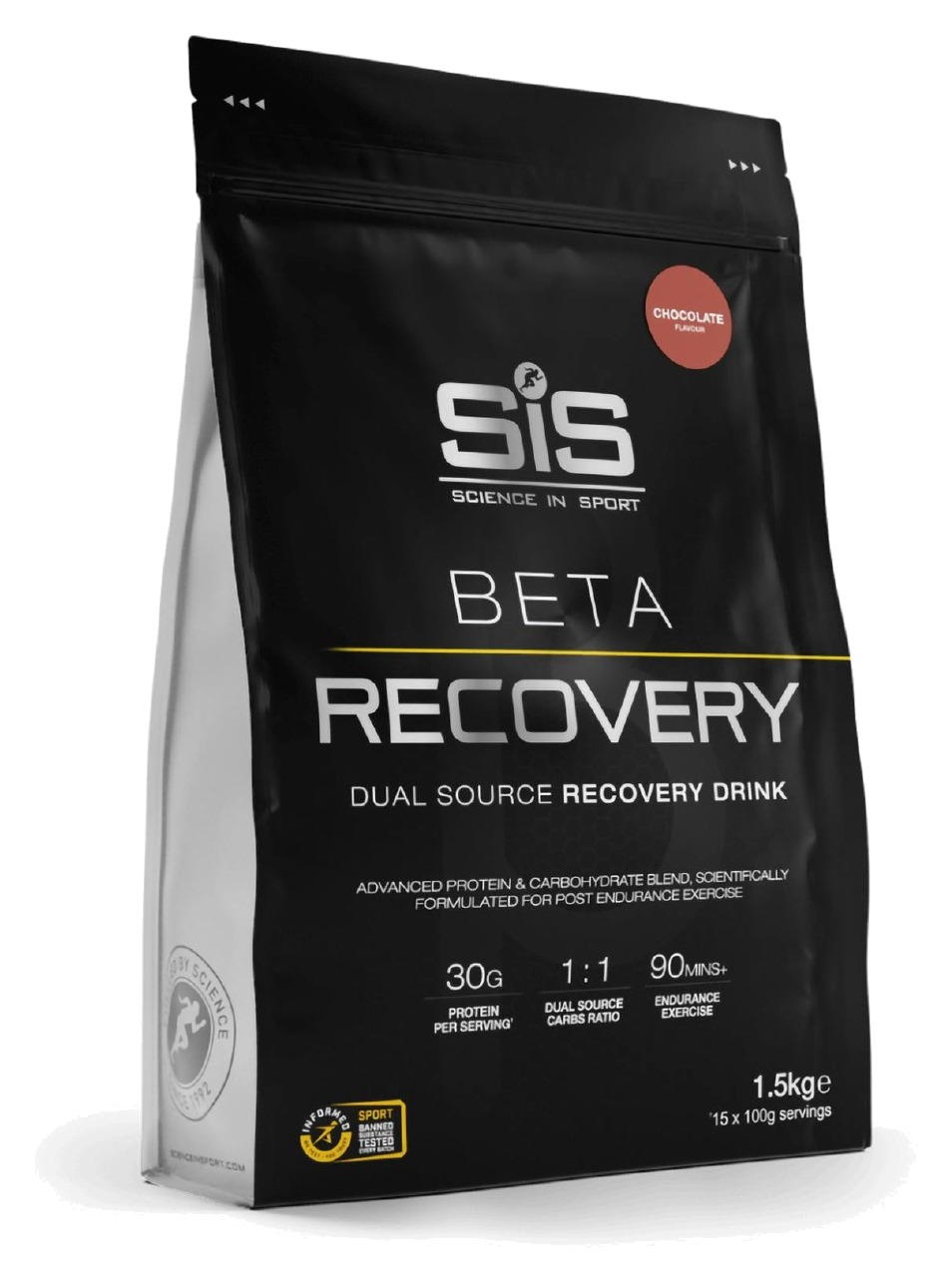
After a long or hard ride, your muscles need carbs to refill and protein to repair. Beta Recovery suits the big days and back-to-back events. For everyday training, REGO Rapid Recovery (21g protein, 22g carbs) is the simple choice. And if you only need protein, there is REGO Whey Protein. Then follow up with a proper meal.
Train your gut before race day
Your gut can learn to handle more carbs, just like your legs learn to handle more training. So if you normally eat one gel on a long ride, do not jump to 120g an hour on event day.
- Start at 40–60g an hour on your long training rides.
- Add about 10g an hour each week or two, as long as your stomach feels fine.
- Use the exact products and flavours you will use on the day.
- Set a reminder on your bike computer to eat or drink every 20 minutes.
- Write down what worked, including the weather, so you can repeat it.
The golden rule: nothing new on race day.
Which SIS products should you buy?
- New to fuelling, rides under 3 hours: GO Isotonic Gels + GO Electrolyte
- Long events and racing: Beta Fuel Drink + Beta Fuel Gels or Chews
- Hot days or salty sweater: add GO Hydro or Hydro+, and swap in Electrolyte Gels
- A boost for the finish: GO Energy + Caffeine Gel or Beta Fuel + Nootropics Gel
- Lots of training on a budget: GO Energy Powder 1.6kg
- Recovery: Beta Recovery for big days, REGO Rapid Recovery for everyday
SIS fuelling guide FAQ
How many carbs per hour do I need when cycling?
Most riders need 30–60g an hour on rides of 1–2 hours, and 60–90g an hour on rides over 2 hours. Gut-trained riders on long or hard days can go up to 120g an hour with a dual-source product like Beta Fuel.
What is the difference between SIS GO and Beta Fuel?
GO is the everyday range, with 22g gels that suit rides up to about 2–3 hours. Beta Fuel uses a 1:0.8 maltodextrin to fructose mix and packs more carbs per serve, so it suits long rides and racing where you need 80g or more an hour.
Do I need electrolytes as well as carbs?
On short or cool rides, a normal energy drink is usually enough. However, on hot days, long rides, or if you are a salty sweater, add a high-salt drink like GO Hydro or Hydro+ alongside your carbs.
How much caffeine should I take on a ride?
Around 3mg per kilo of body weight works for most riders, spread across the ride or taken before the start. Test it in training first, and keep it under SIS’s daily limits on the pack.
Is SIS tested for banned substances?
Yes. The SIS range is Informed Sport tested, so it suits riders who race under drug-testing rules.
Where can I buy SIS in Melbourne?
Port Melbourne Cycles stocks the SIS range at 107 Bay Street, Port Melbourne, and we send orders Australia-wide. Order online or call us to check availability.
This guide is general information, not medical advice. For a personal plan, especially if you have a health condition, speak to an Accredited Sports Dietitian.
Shop the SIS range at Port Melbourne Cycles
Ready to build your plan? Browse the full Science in Sport range or everything in Nutrition & Fuel. Not sure what suits your event? Get in touch with the team and we will help you put together a fuelling plan for your next ride.


